Mr. Tigges, you lead large-scale projects at Data Center Group. What exactly does your role involve?
Large-scale projects are initially developed and planned internally. This includes building customer relationships, developing concepts within the team, and bringing them to planning maturity. Based on the approvals we obtain, we create the execution planning and realize the buildings, including commissioning up to turnkey handover.
My role is primarily to bring together people from a wide range of disciplines along our value chain so that the technical complexity of the tasks becomes understandable through communication, allowing the individual puzzle pieces to come together into a coherent overall picture.
What defines a “large-scale project” at Data Center Group?
Large-scale projects develop along our value chain. It starts with solid consulting for the client together with colleagues from the consulting team and the preparation of a feasibility study.
If the client is satisfied and it is ensured that the local energy provider can supply sufficient electricity, we receive the assignment to prepare the building application for the engineering department. This department consists of architecture and technical building services, covering all engineering services—from civil and structural engineering to electrical systems and cooling, heating, ventilation, sanitation, and security, coordinated under one roof at DCG.
If we perform well and bring the right clients together, we also offer construction via our cost estimation department and then realize the projects after contract award on time and with quality as turnkey solutions through our construction unit led by CTO Markus Böhmer.
Building on this, and in combination with warranty issues, we ensure customer satisfaction through our service department by concluding maintenance contracts.
Throughout this value chain, we are supported by the procurement team, controlling, and the finance and HR departments under CFO Philipp Riemen, who also serves as the main link to our parent company MVV Mannheim, of which DCG is part of the “solution house.”
What are the biggest challenges in implementing large-scale data center projects?
Bringing people together and forming a team. Identifying project-specific challenges and critical paths, and addressing them in a solution-oriented way while communicating at eye level.
The implementation of large-scale data center projects currently faces major challenges, mainly driven by the AI boom, rising energy demand, and regulatory requirements.
What factors determine whether a project is successfully completed?
Successful project completion depends on a combination of structured management methods, clear communication, and qualified teams. The key is achieving the agreed goals within the timeframe and budget, meaning: Time and Quality – as always at DCG.
The better we plan, the faster and higher quality we can build. Shorter construction time and satisfied clients inevitably lead to more cost-efficient projects and thus success.
It also means placing the right people in the right roles—and for every participant, success means contributing to the project and being part of the team. Internal posts, social media, and DC Mag contribute to this positive sense of achievement.
How do the different departments collaborate on large-scale projects?
A project-specific team is formed from architecture, structural engineering, electrical, HVAC, and security departments. Each team is led by a project manager, who is also the main contact for the client “One Face to the Customer.”
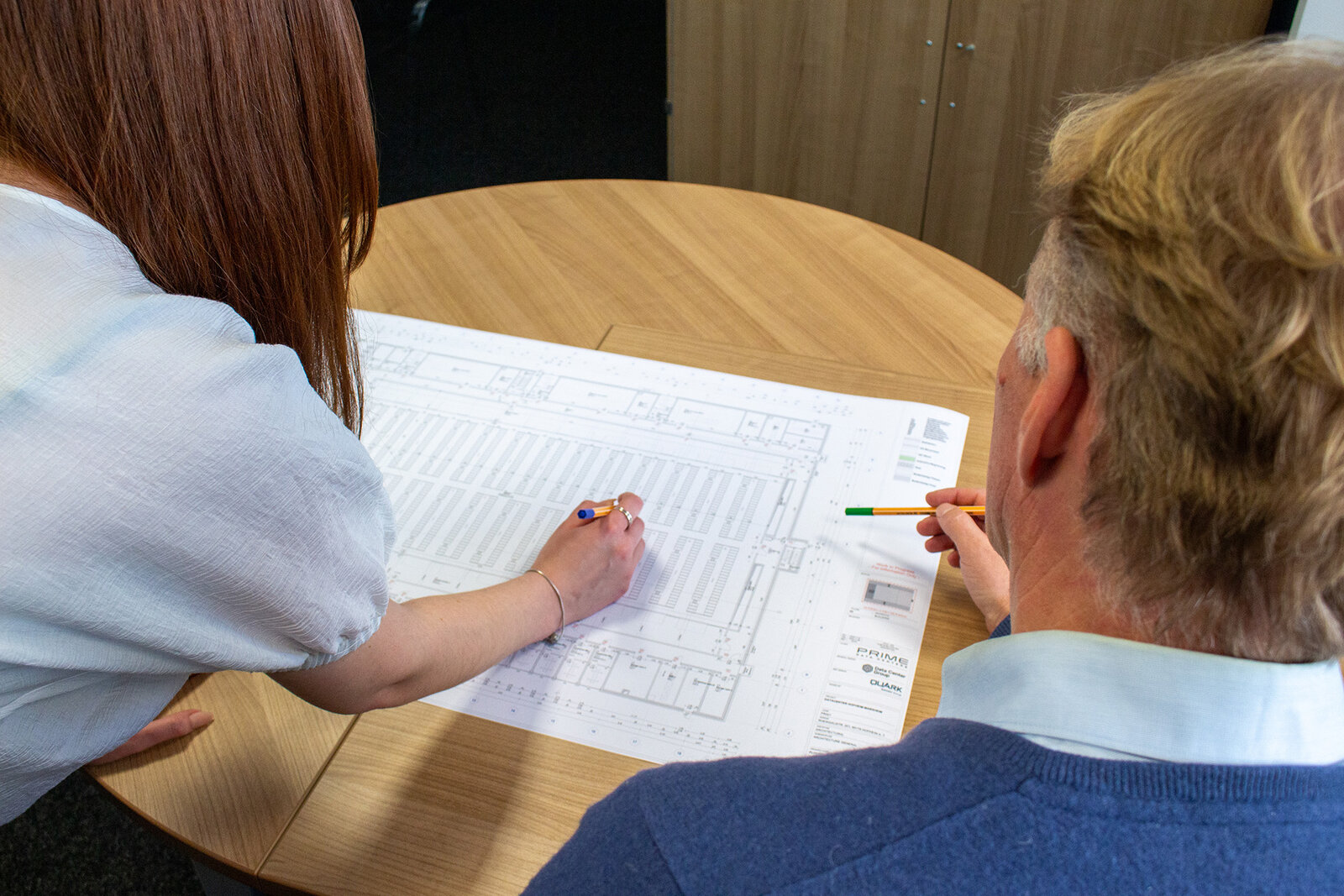
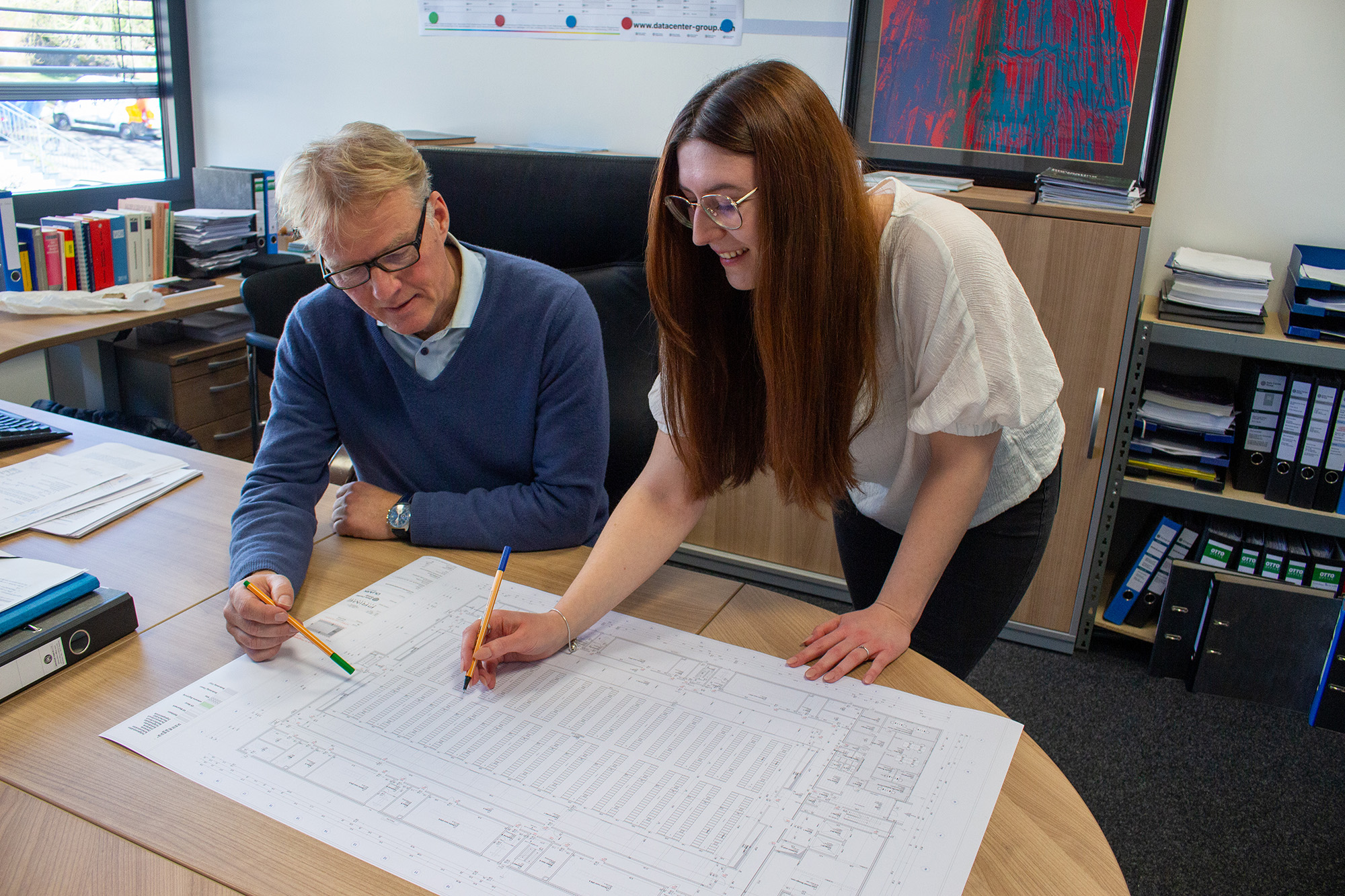
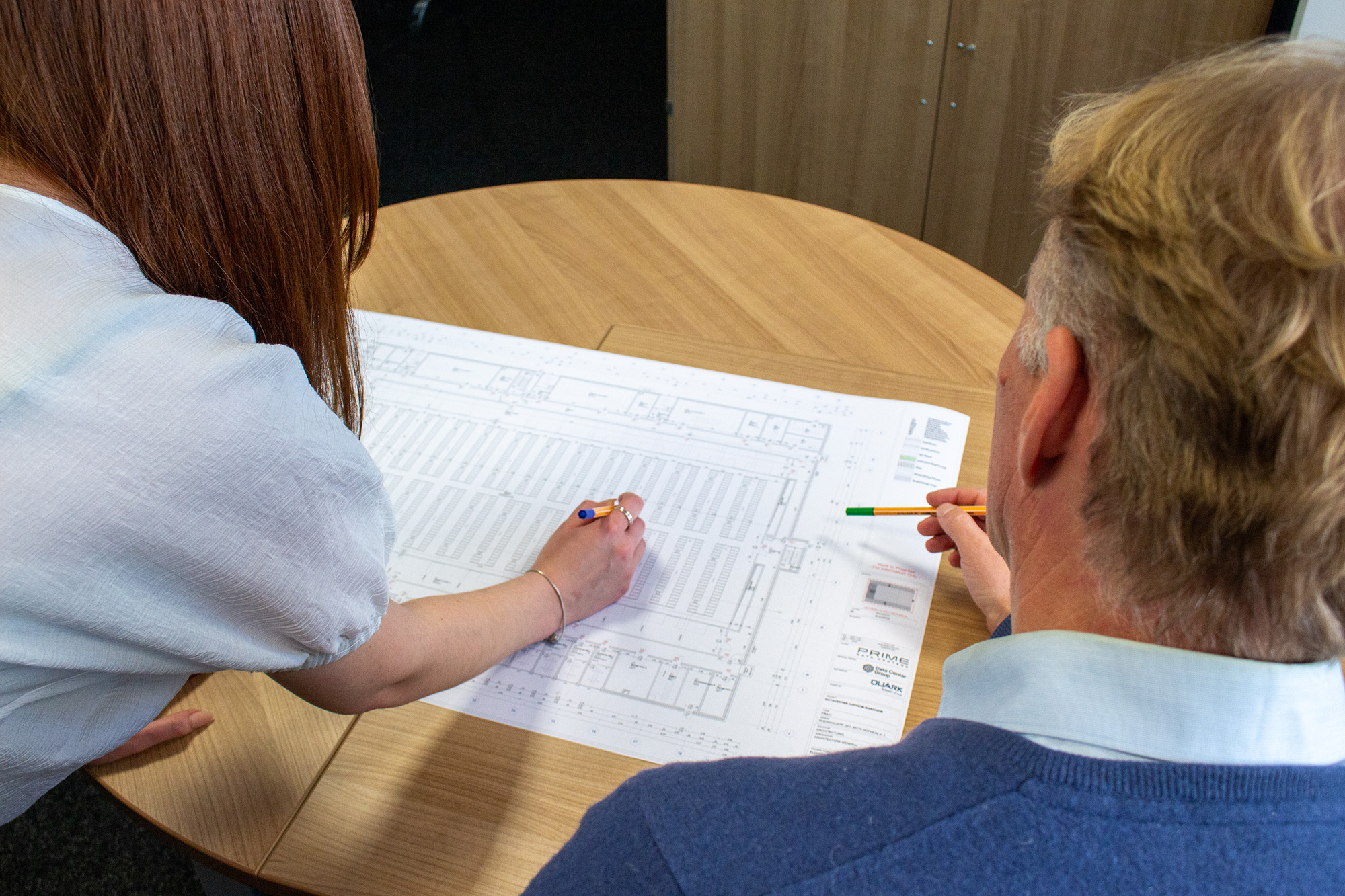
Behind the scenes, many people contribute. Floor plans, sections, and elevations are first created by draftspeople, already defining space requirements for major technical components.
In-house visualizations help explain concepts to authorities and clients. The technical design builds on the architectural planning, and detailed planning is coordinated across all disciplines.
Work is carried out on a shared model accessible via a platform where all participants can collaborate according to their permissions.
What role do external partners and clients play in project execution?
Business is conducted between people. Both customer relationships and collaboration with external planners, experts, and contractors must be based on mutual respect to achieve the best outcome for the client.
We value a healthy mindset and trustful cooperation, even in challenging discussions. I prefer to call subcontractors “co-entrepreneurs”. Both sides must share a similar mindset. We work with suppliers whose philosophy aligns with ours as a medium-sized company.
What is the importance of high-level concepts for project success, and what must they include?
High-level concepts are fundamental, as they bridge the gap between the initial idea and detailed planning. They help structure complexity, clarify goals, and minimize risks early on.
Together with our clients, we develop a suitable model that is also viable in a business case. A high-level concept is essential, especially considering different end customers such as hyperscalers, colocation providers, authorities, and emerging trends like AI technologies.
What key technical decisions are made at the high-level concept stage?
At this stage, fundamental technical decisions are made regarding architecture, technologies, and security aspects without going into detail.
This includes regulatory considerations, as well as defining cooling and power concepts depending on availability. Initial assessments of emissions and environmental impact are also carried out.
When are redundancy, scalability, and availability defined?
These aspects are defined very early, ideally during requirements analysis and at the beginning of architecture planning (high-level design).
Without sufficient power and fiber connectivity, operating a data center becomes difficult.
How do you plan for requirements that will only become clear in the future?
We don’t have a crystal ball, but thanks to our position along the value chain, we stay close to market developments and customer needs.
Planning for the future requires shifting from rigid forecasting to agile adaptability. We don’t plan for exact outcomes, we plan to respond quickly to the unknown.
How have large-scale data center projects evolved in recent years?
They have changed fundamentally, driven by the AI boom, sustainability requirements, and capacity shortages. Projects have become larger, more complex, and more expensive, with a strong focus on energy efficiency and speed to market.
Planning has advanced significantly through BIM, enabling early detection of design conflicts.
At the same time, regulatory requirements such as emissions laws and certifications like Blue Angel, DGNB, LEED, and ESG have become more important.
How does DCG address increasing demands for speed, sustainability, and scalability?
We use a holistic approach combining modular construction, energy-efficient technologies, and tailored planning.
Sustainability is not new to us, we follow state-of-the-art standards, including energy efficiency, heat recovery, rainwater usage, and green façades and roofs.
Scalability is achieved through modular construction methods such as prefabricated concrete components and container solutions, including scalable energy units (transformers, UPS, batteries, generators).
How will large-scale data center projects develop in the future?
Data center construction is no longer a niche market. Many large construction companies are entering the field, especially with major investments in Europe and Germany.
By 2030, data center projects will evolve into highly complex, AI-driven “infrastructure power plants,” driven by a doubling of global capacity due to AI demand.
DCG aims to always deliver the best solutions for customers. With our experience and integrated value chain, we strive to stay ahead of competitors.
Image rights: © Data Center Group